Why Piano Study Aligns Naturally with Autistic Strengths
The piano is uniquely positioned to welcome neurodiverse learners. Keys are laid out in a clear left-to-right pattern, tones are predictable, and feedback is immediate. For many families exploring piano lessons for autism, the instrument’s structure can provide both comfort and motivation. Regular practice introduces routine, while musical repetition strengthens memory, attention, and sequencing. These are core skills that often benefit autistic learners across home, school, and community settings.
Auditory, visual, and tactile channels intersect at the keyboard, allowing students to choose the pathways that feel safest and most intuitive. Some may lead with pattern recognition, quickly mapping black-key groups and scales. Others respond to the physics of sound, experimenting joyfully with dynamics and pedal color. When lessons harness these preferences, intrinsic motivation grows. This is why a strengths-focused approach beats a one-size-fits-all curriculum; it honors difference and turns it into momentum.
The piano also cultivates self-regulation. Slow, even keystrokes paired with steady breathing can soothe. Rhythmic entrainment—synchronizing body movement with a beat—supports timing and motor planning. Over time, learners may transfer these rhythmic skills into daily routines like transitions, morning prep, or homework blocks. For a piano lessons for autistic child plan to be truly effective, the session flow should alternate stimulation and recovery: playful improvisation might be followed by quiet pattern work, then a preferred piece, then a short pause. This pacing respects nervous system needs while still moving forward musically.
Communication goals often flourish at the keyboard. Nonverbal students can choose between chords, gestures, color-coded cards, or AAC buttons to make musical decisions. Shared attention—looking at the same page or hand position—becomes a bridge to joint engagement. Duets with a teacher or caregiver reinforce turn-taking and listening. When students experience agency—selecting songs, deciding tempos, or shaping a crescendo—the lesson becomes a practice in autonomy. That sense of “I can do this” transfers beyond music. The result is not only better musicianship but deeper confidence, joy, and connection.
Teaching Methods, Tools, and Adaptations That Make a Difference
Successful piano lessons for autism begin with an individualized plan. Start by mapping the learner’s sensory profile, attention span, and motor strengths. Some students benefit from weighted keys to provide proprioceptive input; others prefer a lighter touch or a digital piano with adjustable volume. Visual schedules placed on the music stand outline each step of the session. A clear beginning, middle, and end—perhaps “warm-up, piece A, piece B, choice time, wrap-up”—reduces uncertainty and supports transitions.
Notation can be adapted. Color-coded noteheads, simplified lead sheets, or number-based systems (e.g., finger or key numbers) offer on-ramps to standard notation. Rote learning and imitation are equally valid: modeling short patterns, echo-playing, and call-and-response are powerful pathways to accuracy and phrasing. Many autistic learners excel with pattern-first approaches: block chords become broken chords, which become arpeggios; five-finger positions shift by half steps to explore keys without overwhelming cognitive load. Strategic repetition—looping two measures at a time, then linking—builds fluency with less frustration.
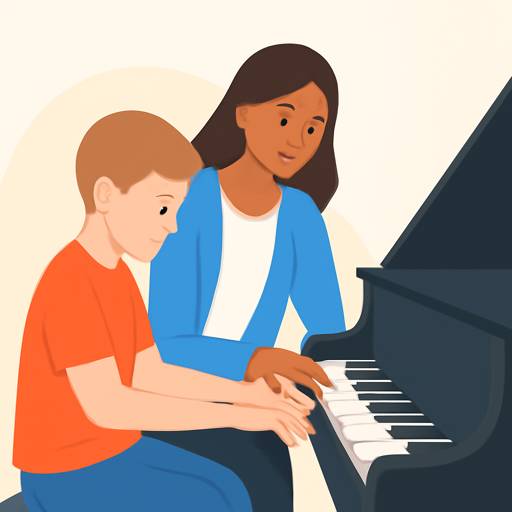
Behavioral supports integrate seamlessly with artistry. Clear, positively worded expectations (“Quiet hands until count-in; then play together”) work better than corrections mid-phrase. First-then prompts (“First C position warm-up, then your favorite theme”) aid motivation. Reinforcers can be musical: a preferred improvisation or a sound exploration break with pedal effects. For learners who need it, prompt hierarchies move from gestures to verbal to independent execution, always fading supports as soon as possible. Respect for autonomy matters; hand-over-hand is used only with consent and in brief, supportive ways, prioritizing the student’s comfort.
Practice design influences outcomes as much as instruction. Short, daily micro-sessions often outperform a single long practice. Chunking (two bars at a time), interleaving (alternating pieces), and spaced retrieval (revisiting yesterday’s fragment) make learning stick. Incorporating movement—marching to a metronome, tapping rhythms on a drum pad—helps translate beat to fingers. Communication tools such as AAC devices, choice boards, or simple gesture systems keep decision-making accessible. Caregiver involvement strengthens carryover: a shared log tracks which strategies worked, which tempos felt comfortable, and what goals are next. When a piano teacher for autism collaborates with therapists or adapts goals to align with IEP objectives, lessons become an integrated part of a learner’s support ecosystem.
Real-World Examples and How to Choose the Right Teacher
J., age 9, loved trains and numbers but avoided traditional notation. Using a number-grid system overlaid on the keys, J. learned to play a two-chord left-hand pattern underpinning simple melodies. Each chord change was paired with a “station stop” visual. Within eight weeks, J. transitioned from numbers to letter names for bass notes, then to lead sheets. The teacher embedded train whistle motifs as “cue tones” for dynamics, making crescendos fun and memorable. By month four, J. performed a short duet at a family gathering, demonstrating steady tempo and independent hand movement—goals that once seemed out of reach.
M., age 12, experienced auditory sensitivity and found sudden loud sounds overwhelming. Lessons began on a digital piano with volume limits and over-ear headphones that balanced input. Warm-ups started with silent key depressions to feel key travel, then graduated to pianissimo scales. Visual timers, breathing exercises between sections, and predictable section lengths reduced anxiety. Instead of full pieces immediately, M. mastered “sound postcards”: 8–12 measure vignettes that captured a single mood or texture. Over time, M. stitched postcards together into a complete piece, building tolerance for longer play while preserving control over dynamics and pacing.
T., age 15, communicated primarily with an AAC device and showed strong rhythmic intuition. The teacher introduced chord buttons on the device that triggered images of I, IV, and V. During lessons, T. selected progressions, and the teacher accompanied with a drum loop to lock in groove. T. improvised pentatonic melodies over these chords, later learning how the scale shapes fit under the hand. The result was expressive, student-led music-making that strengthened decision-making, joint attention, and fine motor control—milestones recorded in both lesson notes and therapy updates.
Choosing the right instructor is pivotal. Look for someone who can translate music concepts into multiple modalities—visual, auditory, and kinesthetic—without sacrificing musicality. Ask how they assess sensory needs and what adaptations they use for attention, motor planning, and communication. A patient demeanor, flexible pacing, and a clear plan for generalizing skills from studio to home are essential. The studio environment should be welcoming: adjustable lighting, minimal clutter, and predictable lesson flow. Trial lessons reveal a lot—does the teacher celebrate small wins, offer choice, and respond calmly to unexpected moments? Collaboration is a virtue; teachers who exchange notes with caregivers, therapists, or educators help build continuity across contexts.
For families seeking a dedicated piano teacher for autistic child, specialized directories and networks connect learners with instructors trained in neurodiversity-affirming practices. Prioritize educators who emphasize strengths, invite autonomy, and employ evidence-aligned strategies like visual supports, scaffolded practice, and positive reinforcement. When the relationship is right, the piano becomes more than an instrument—it becomes a reliable space for mastery, communication, and joy, advancing musical skill while nurturing confidence that extends into every corner of life.

A Sofia-born astrophysicist residing in Buenos Aires, Valentina blogs under the motto “Science is salsa—mix it well.” Expect lucid breakdowns of quantum entanglement, reviews of indie RPGs, and tango etiquette guides. She juggles fire at weekend festivals (safely), proving gravity is optional for good storytelling.