Principles of Facial Aesthetic Analysis and Anatomical Aging
Understanding the face requires a departure from viewing it as a two-dimensional surface. Instead, we must analyze it as a complex, three-dimensional architecture. Effective aesthetic planning begins with a comprehensive evaluation of how light hits the skin, how volume supports the overlying tissues, and how the underlying skeletal foundation provides the necessary “anchors” for a youthful appearance.
Foundations of Facial Plastic Surgery and Aesthetics: Balance, Symmetry, and Proportion
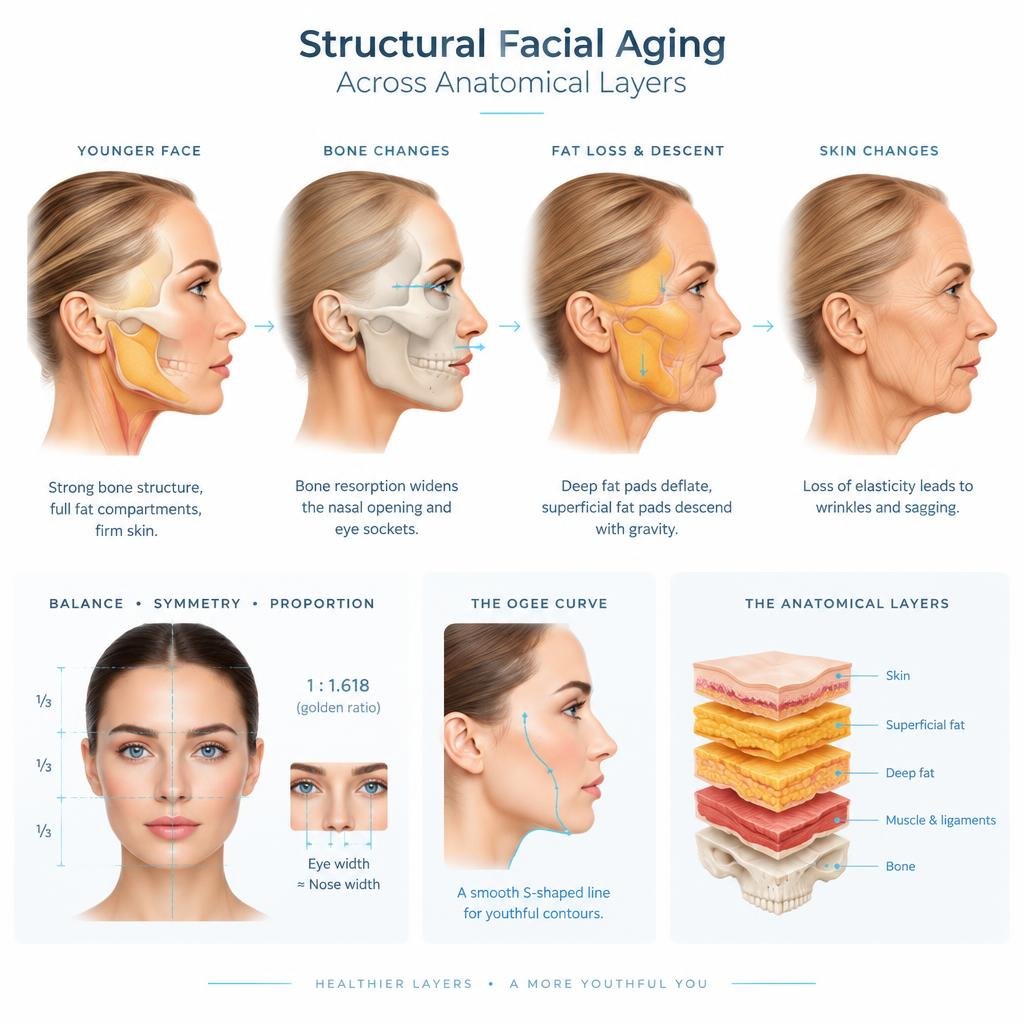
Beauty is often described through the lens of mathematical harmony. Concepts like the “golden ratio”—a proportion of approximately 1 to 1.618—have long guided artists and surgeons alike in determining what the human eye perceives as balanced. In clinical practice, we utilize these principles by dividing the face into horizontal thirds and vertical fifths.
For instance, the distance from the hairline to the brow, the brow to the base of the nose, and the base of the nose to the chin should ideally be equal. Similarly, the width of the eyes should correspond to the width of the nose, creating a sense of equilibrium. Beyond these static measurements, we look for the “Ogee curve,” an S-shaped line that follows the cheekbone and tapers into the jawline, which is a hallmark of youthful facial contours. Modern 3D photography and digital analysis allow us to map these features with precision, helping patients visualize how minor adjustments to the chin or cheekbones can shift the entire balance of their profile.
Multi-Layer Structural Aging Across Bone, Fat, and Skin
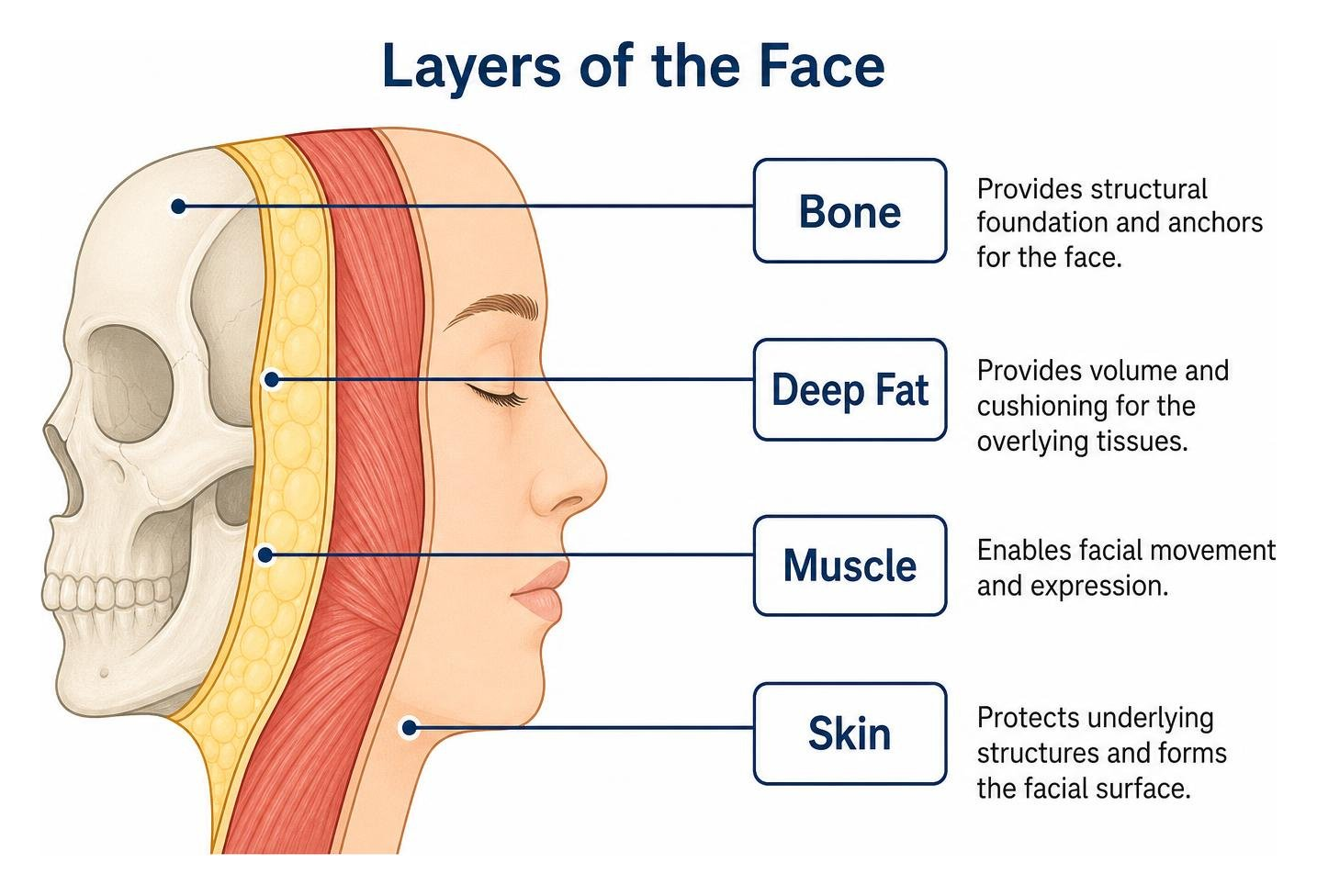
Aging is not merely a process of skin laxity; it is a multi-layer event. Over time, the bony foundation of the face undergoes resorption—the pyriform aperture (the nasal opening) widens, and the eye sockets expand, causing the midface to lose its structural support. Simultaneously, deep fat pads that provide “cushioning” deflate, while superficial fat pads descend due to gravity and the weakening of facial ligaments.
When the skin loses its elasticity and the underlying support system collapses, we see the development of dynamic rhytids (wrinkles) and sagging. Our approach to rejuvenation must address these layers individually. We categorize patients using the Fitzpatrick phototyping scale, which is essential for determining how skin will respond to treatments like laser resurfacing. A successful plan addresses the skeleton, the fat compartments, and the skin envelope, ensuring that the results look natural rather than “stretched.”
Comprehensive Approaches in Facial Plastic Surgery and Aesthetics
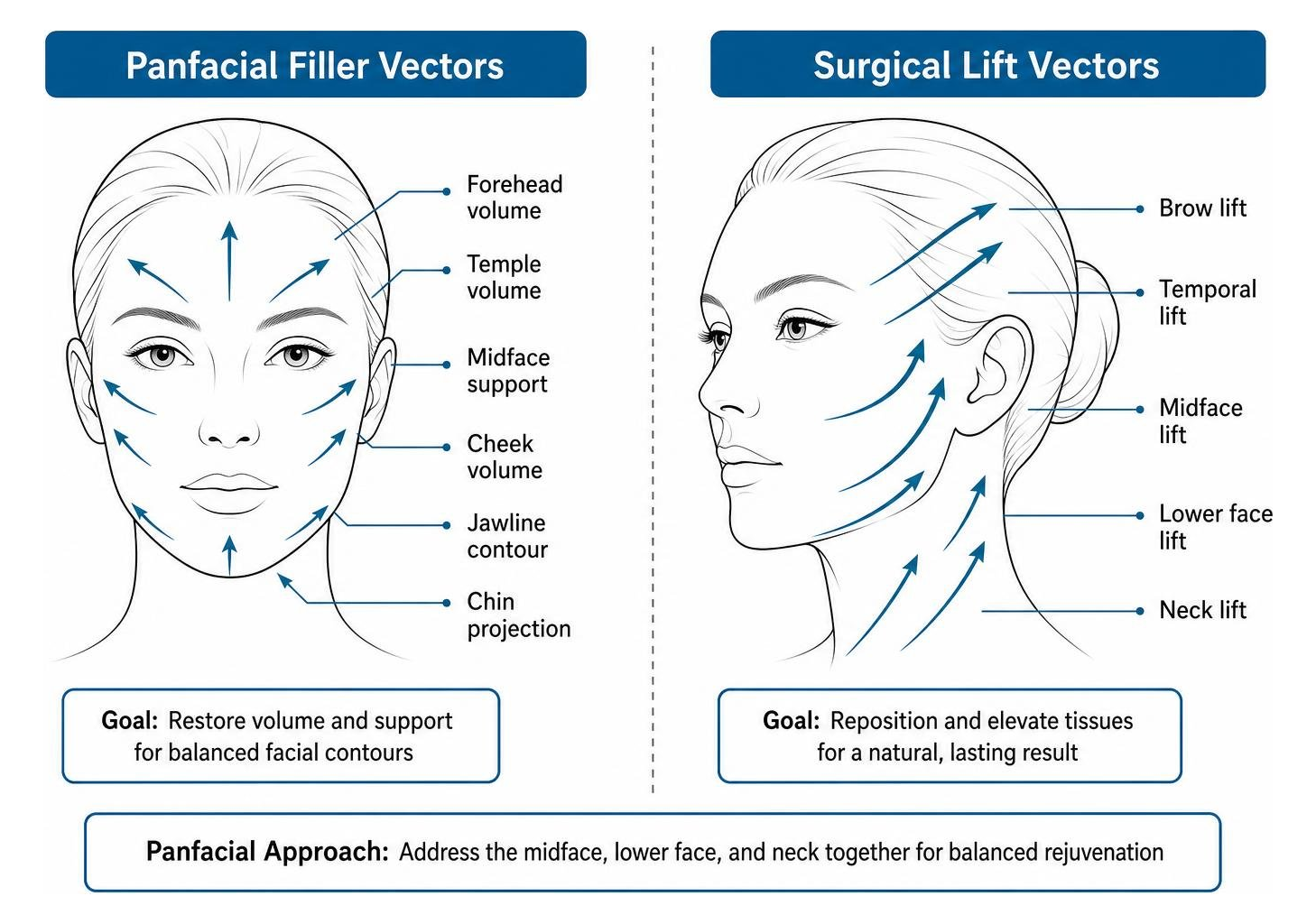
The most significant shift in recent years is the move toward a panfacial approach. Rather than treating a single concern—such as a nasolabial fold—in isolation, we examine how the midface, lower face, and neck interact.
Surgical Techniques: From Deep Plane Rhytidectomy to Structural Contouring
Surgical intervention remains the gold standard for addressing significant tissue laxity. A deep plane facelift, for instance, allows for the repositioning of the SMAS (superficial musculoaponeurotic system) layer, providing a lift that is more durable and natural than skin-only tensioning. For specialized areas, such as the delicate structures around the eye, oculo facial plastic surgery techniques are employed to ensure that rejuvenation enhances function while restoring a refreshed, alert look.
We also prioritize structural integrity by using tissue sealants, which have been shown to reduce hematoma rates and fluid buildup, ultimately shortening recovery times. In many cases, we combine these procedures with structural fat grafting, which uses the patient’s own tissue to restore lost volume in the cheeks or temples, providing a soft, long-lasting aesthetic anchor.
Advanced Modalities in Facial Plastic Surgery and Aesthetics: Fillers, Energy Devices, and Biologics
When surgery is not the immediate answer, or when used as an adjunct, non-surgical modalities offer incredible versatility. Hyaluronic acid (HA) fillers are selected based on their “G-prime” (a measure of hardness or lift capacity) and cohesivity. For example, a high-G-prime filler is ideal for chin projection, where firm support is needed, while a softer, more cohesive filler is preferred for smoothing fine lines.
Furthermore, we are increasingly integrating regenerative aesthetic skin treatments to improve skin texture and quality from the inside out. These treatments, which may include platelet-rich plasma (PRP) or exosome-based therapies, work alongside traditional fillers and neuromodulators to create a holistic result.
Patient-Centered Treatment Planning and Safety Protocols
Every patient brings a unique history to the consultation room. Our role is to align their personal aesthetic goals with what is anatomically achievable and safe.
Tailoring Care Across Demographics, Gender, and Ethnicity
A “one-size-fits-all” approach is obsolete. For instance, ethnic rhinoplasty requires a deep understanding of unique nasal cartilage structures to ensure aesthetic refinement without compromising breathing or cultural identity. Similarly, male patients often seek a stronger, more defined jawline, which requires a different approach to volume placement compared to the softer, more rounded contours often desired in female facial aesthetics. For patients with melanin-rich skin, we are particularly careful with energy-based devices and laser protocols to avoid the risk of post-inflammatory hyperpigmentation.
Minimizing Surgical Risks and the Value of Specialized Board Certification
Safety is the cornerstone of our practice. This begins with rigorous preoperative screening—identifying medical comorbidities and mapping facial anatomy to avoid critical vascular structures. Specialized board certification, such as that provided by the American Board of Facial Plastic and Reconstructive Surgery (ABFPRS), is a vital indicator of a surgeon’s training. These specialists have undergone extensive, focused education in the anatomy and aesthetic artistry of the face, ensuring they are equipped to manage the nuances of complex procedures and mitigate potential complications.
Frequently Asked Questions About Facial Plastic Surgery and Aesthetics
What is the primary advantage of a panfacial approach over single-area treatments?
The panfacial approach ensures structural harmony. By addressing the midface first, we often find that the lower face and neck appear more refreshed without the need for aggressive, isolated treatments. This prevents the “overfilled” or “operated-on” look and ensures that the patient’s features remain proportionate.
How do clinicians determine whether a patient needs surgical intervention or nonsurgical aesthetics?
We evaluate the degree of tissue laxity, the presence of skeletal deficiency, and the patient’s desired recovery timeline. Nonsurgical methods are excellent for skin quality and mild volume loss, but when there is significant skin redundancy or structural bone resorption, surgical intervention provides the foundational support that injectables cannot achieve alone.
Why is specialized board certification critical for facial aesthetic procedures?
Facial plastic surgery is a highly specialized field. Surgeons with dual board certification—often in otolaryngology or plastic surgery—possess an intimate knowledge of the complex, delicate architecture of the face. This expertise is the best defense against complications and the best guarantee of a natural, safe outcome.
Conclusion
Facial plastic surgery and aesthetics have evolved into a sophisticated discipline that blends medical science with artistic vision. By adopting a panfacial perspective, utilizing advanced regenerative therapies, and prioritizing the foundational structural needs of the face, we can achieve results that are not only beautiful but also deeply natural. The journey to a refreshed appearance should always be grounded in a comprehensive evaluation and a commitment to safety. By choosing a board-certified specialist and engaging in a thoughtful, multi-layered treatment plan, patients can look forward to outcomes that honor their unique features while restoring the vitality of their youth.

A Sofia-born astrophysicist residing in Buenos Aires, Valentina blogs under the motto “Science is salsa—mix it well.” Expect lucid breakdowns of quantum entanglement, reviews of indie RPGs, and tango etiquette guides. She juggles fire at weekend festivals (safely), proving gravity is optional for good storytelling.